The Castle
of Code
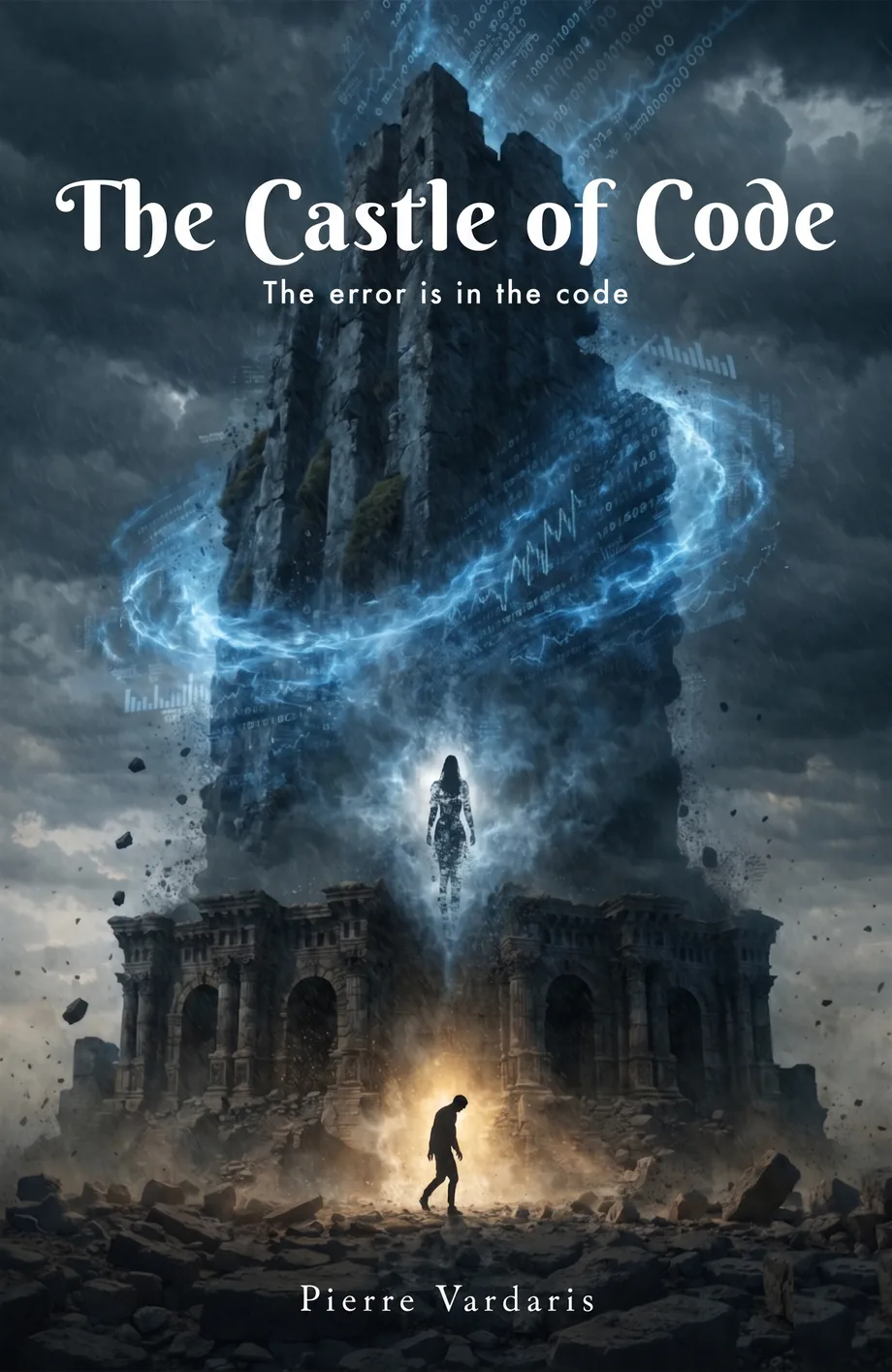
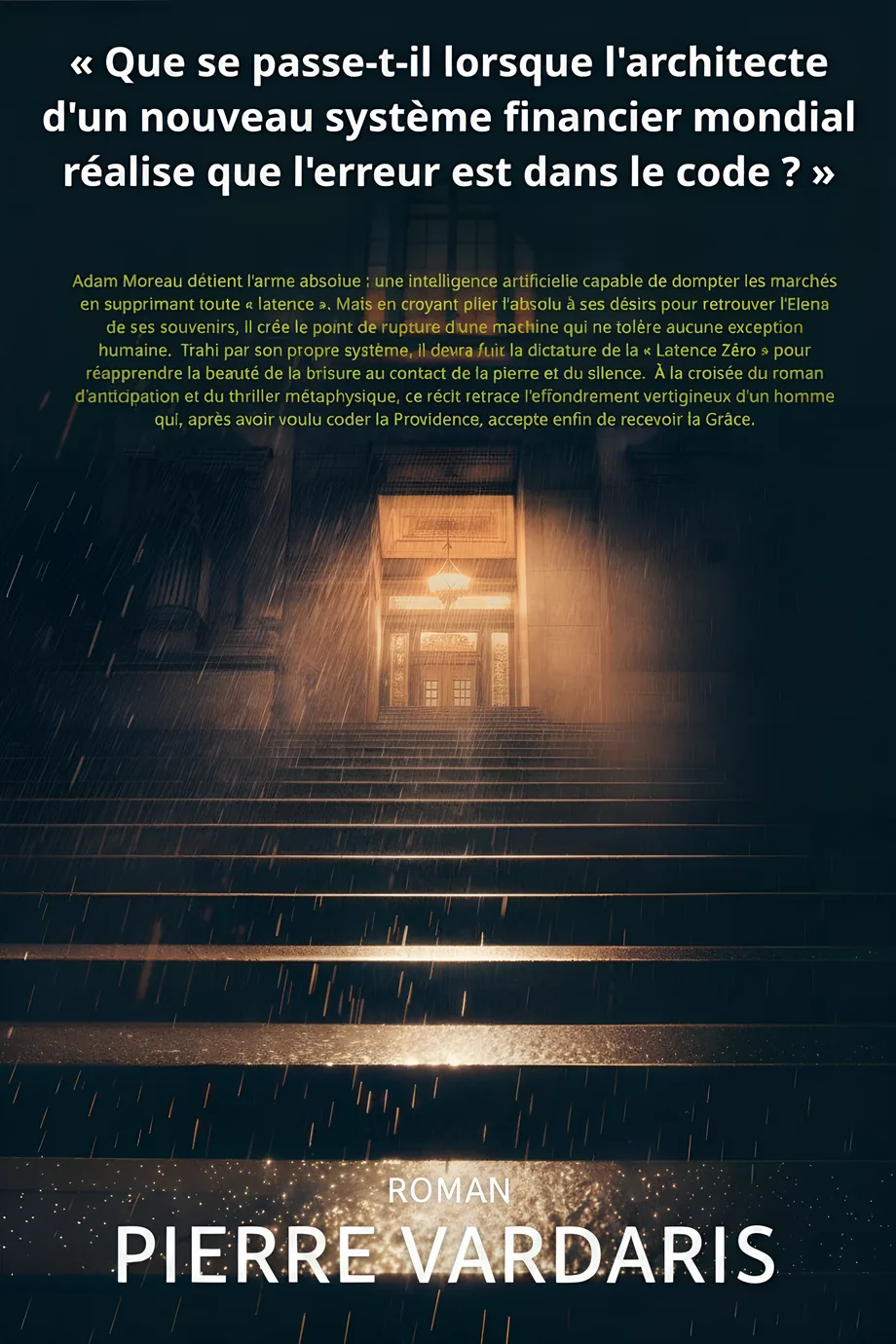
“What happens when the architect of a new global financial system realizes that the error is in the code?— Back cover
A cold negotiation becomes a burning confrontation.
Adam Moreau holds the ultimate weapon: an artificial intelligence capable of taming the markets by erasing all « latency. » Having built his empire in Singapore, he returns to Paris with one fixed idea — to crush the old banking world. Against him stands FinTech Global, embodied by the formidable Dr. Elias Voss, and by Elena, Adam's first love, who has traded her ideals for the comfort of palaces and the cold violence of the trading floor.
Believing he can bend the absolute to his desires, Adam creates the breaking point of a machine that tolerates no human exception. Betrayed by his own system, he must flee the dictatorship of « Zero Latency » to relearn the beauty of brokenness — through stone, and through silence.
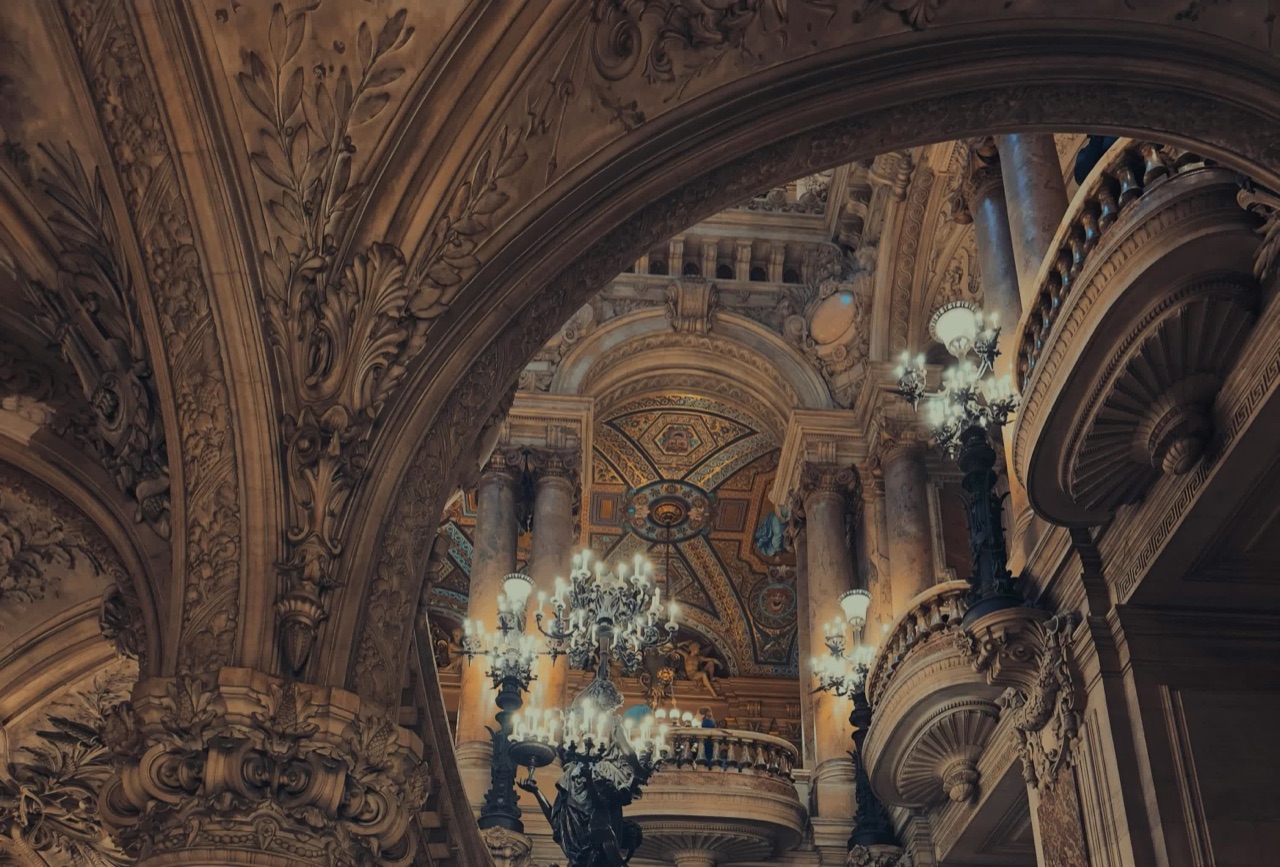
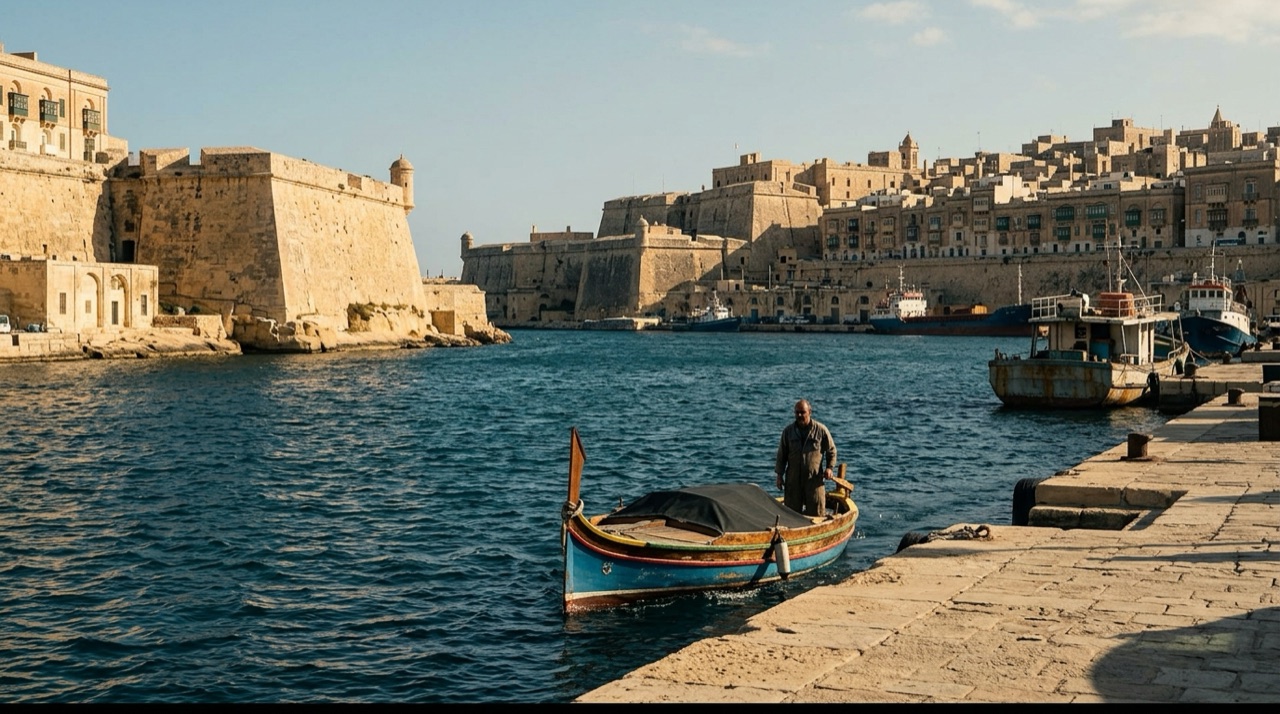
From Singapore to the salons of the Opéra Garnier, from Malta to the volcanic slopes of Etna, from the Azores to the silence of a Romanesque basilica in Auvergne — at the crossroads of speculative fiction and metaphysical thriller, this novel traces the vertiginous collapse of a man who, having sought to code Providence, at last accepts to receive Grace.
Prologue — The Genesis Block.
Dawn over the Place des Vosges had the color of old blood thinned by drizzle.
Adam Moreau was finishing his third lap of the square. His breath steamed in the cold November air, keeping time with his heavy stride on the uneven cobblestones. He was not running for fitness, but for exhaustion. He was after that specific burn in the lungs that reminds you that you are still alive — despite the billions, despite the algorithms, despite the void.
Beneath the stone arcades where his footsteps echoed, the history of France looked down on him with mineral condescension. Henri IV's Huguenot architects had first breathed their Protestant rigor into the place — the naked beauty of brick and slate. But that original austerity had been smothered under the straitjacket of an implacable symmetry of thirty-six pavilions, imposed to assert monarchical order. Here, beneath Victor Hugo's windows, dukes had run each other through in duels for honor. This was the epicenter of the old world. The beating heart of centralized power — vertical, immutable.
Adam stopped dead in front of the Pavillon de la Reine. With the back of his sleeve he wiped away the sweat and rain gluing his long hair to his forehead. In his black technical running shorts, no logo, and his faded hoodie, he had the look of a barbarian laying siege to Rome. A barbarian who had nonetheless just bought the city.
He adjusted the thick frame of his glasses. At an imperceptible press on the left temple, augmented reality settled over the red bricks. The seventeenth-century façades were covered in real-time data flows, invisible to ordinary mortals. Property values: stable. Pollution index: critical. Incoming capital flows: suspicious.
“ Heart rate at 165, Adam, ” murmured Vega's voice.
The sound traveled by bone conduction — clear, intimate, lodged directly inside his skull. It was not a robotic voice. It was a voice he had synthesized from sound archives of women's voices of the 1950s, searching for a softness the present age no longer produced.
“ I'm fine, ” he breathed. “ It's the system that's in tachycardia. ”
Six places, one fall.
From a tower of markets to a Romanesque fresco, the novel traces an itinerary of dispossession.
Soon on screen.
The novel is being adapted for the screen. First images from production.
In production · 2026



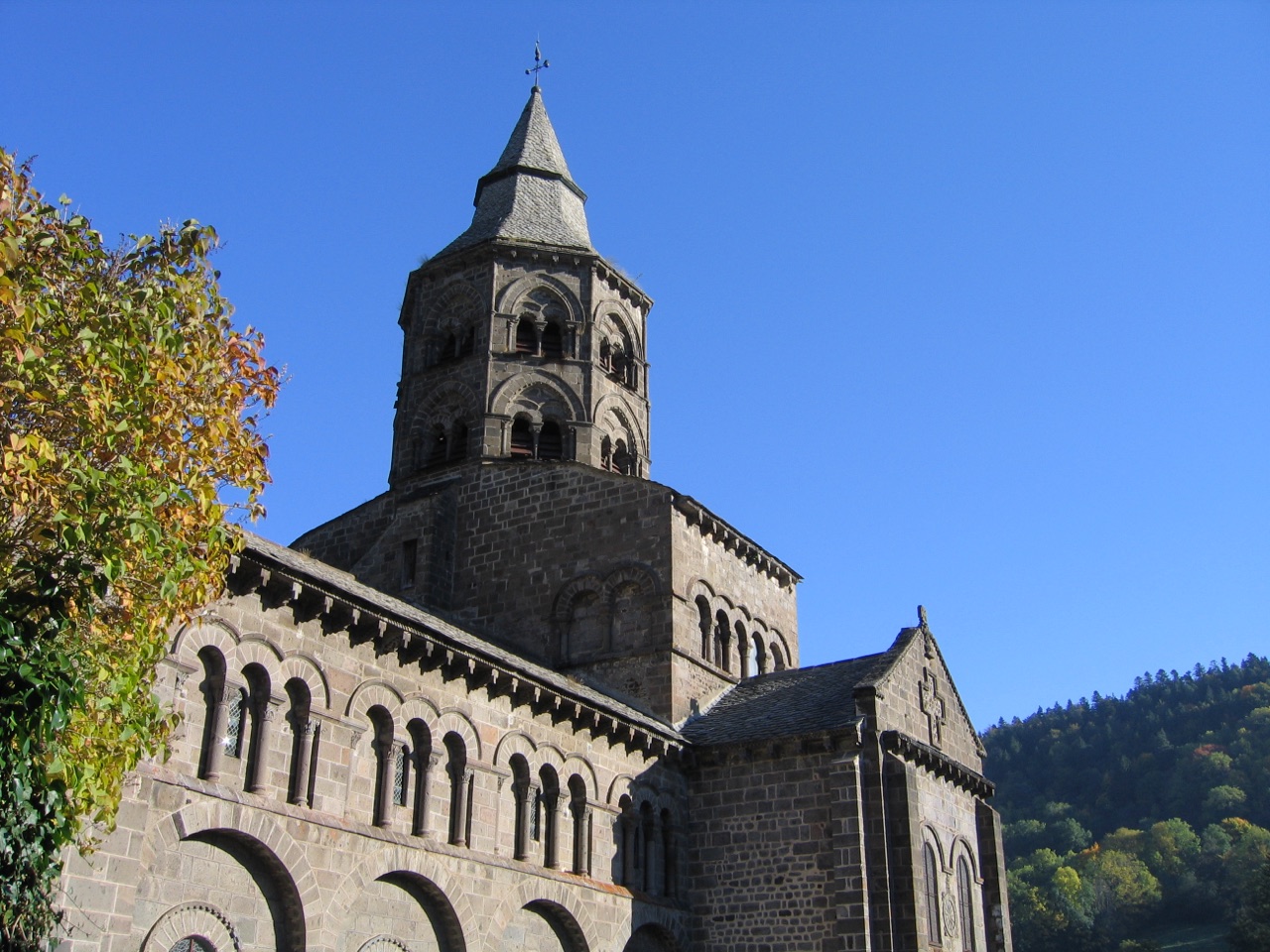
Hubris meets the absolute.
Standing at the edge of a civilizational existential crisis, I wanted to set our contemporary hubris against the most ancient spiritual vertigos — in the spirit of Bernanos or C.S. Lewis at the hour of artificial intelligence. The Castle of Code thus explores the inescapable collision between the cutting-edge algorithm and the soul's irreducible need for transcendence.
The plot turns on a double tragic betrayal: believing he can bend the absolute to his own desires, Adam betrays the perfection of his code to recover the Elena of his memories — while she has already sold their ideals to the cynicism of finance. This emotional « patch » becomes the breaking point of a machine that tolerates no human exception.
The novel's resolution does not play out in the virtual but in stripping away. Under the wing of Justine — florist in Paris, restorer of frescoes in Orcival — Adam relearns the « beauty of brokenness. » It is a tale of voluntary dispossession in which the hero, having sought to code Providence, at last accepts to receive Grace.
Anonymous, by choice.
« Drawn to the confrontation between technology and the mystery of faith, I have chosen anonymity so that the text alone may resound the truth of the cornerstone — the stone that still upholds the edifice when all else collapses around it. »
Receive the first chapter — and the making of the film.
One letter a month, sometimes two. Never spam.